



As Taizhou, a coastal city in Zhejiang with maritime charm, joins hands with its mountainous counterpart Lishui, the "One Heart Between Mountains and Seas" initiative unfolds. We step into Shimen Cave, a hidden gem in Qingtian County, Lishui–a hometown of overseas Chinese–to explore the integration of humanity and nature.
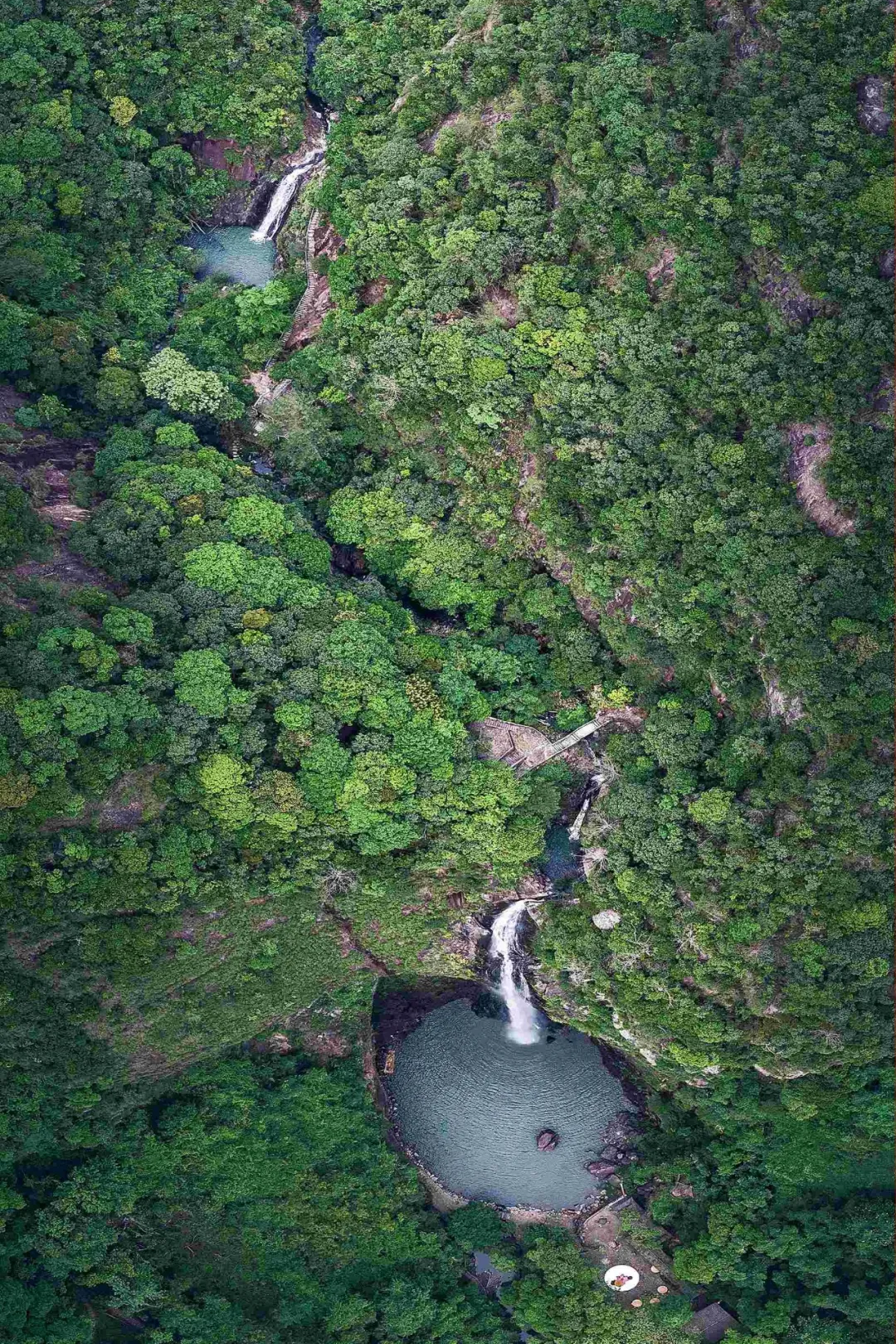
Located in Qingtian County, Lishui, Shimen Cave Scenic Area centers on Shimen Waterfall and Danxia Landforms. The 100-meter waterfall complements exotic peaks and secluded valleys, with cliff inscriptions and other cultural sites preserved. It is a typical example of ecological and historical integration in the southern part of Zhejiang Province.
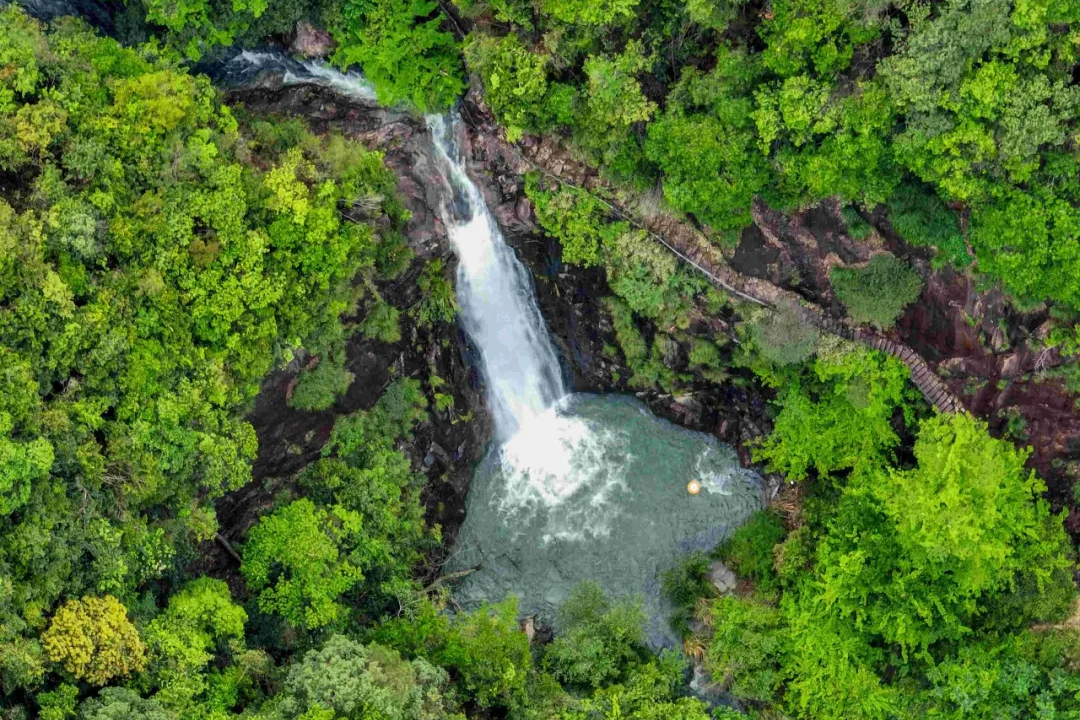
Shimen Waterfall, the fifth cascade of the waterfall group with a 112.5-meter drop, is hailed as "a unique wonder of East China". Shaped like a white silk ribbon, its sprays like pearls and mist like clouds, it is known as "Heavenly Spring" and "Holy Water", and a Tang Dynasty poet Li Bai once wrote a poem for it. The over-10-meter-high Moon Cave offers shelter for viewing the waterfall; its stone bed, said to be where Liu Ji studied and rested, is called "National Master's Bed", and its walls bear 63 cliff inscriptions, the densest in the scenic area.
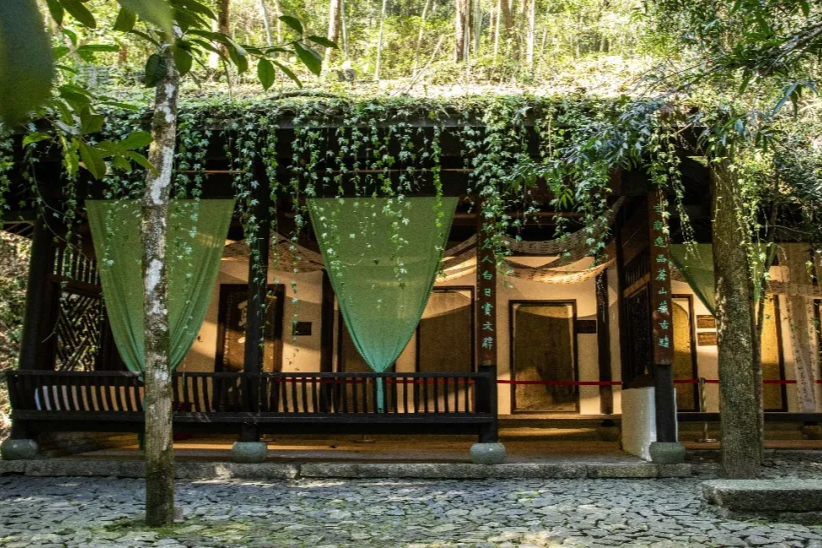
The scenic area has 117 cliff inscriptions and stone steles (29 steles), the densest in the Jiangnan region with a 1,500-year history. It was designated a Provincial Key Cultural Relic Protection Unit in 1963 and upgraded to a national one in 2013. Most of the 29 steles are from the Ming and Qing dynasties, mainly literati's eulogies, covering all five calligraphy styles and boasting historical, literary and calligraphic value.
Shimen Villa, once Chen Cheng's hometown residence, now displays celebrities' inscriptions. Chen Lü'an, Chen Cheng's son, left his calligraphy and painting "Wanshi Diantou" here. Founded in 744 AD, Shimen Academy was where Liu Ji studied in his youth. Rebuilt multiple times, it was restored at its current site in 2010 and once renamed Chen Yibo's Study Hall and the Study of Lord Liu Wencheng.
Originally named Longmen Temple, Lingyou Temple was built during the Ming Tianqi Reign (1621-1627) by Guan Yongfu, Military Administration Intendant of Wenchu, to enshrine Sakyamuni, and later renamed in memory of Monk Li Lingyou. Destroyed in the Xianfeng Reign, it was rebuilt in the Yichou year of the Tongzhi Reign (1889) with monks' donations and holds the "Sunning of the Buddha" from the 6th to the 8th day of the sixth lunar month. Its Guanyin Pavilion, founded in 1091 (Song Dynasty) on Gu Mountain, was moved to the current site in 1621.
Taizhou and Lishui are paired mountain-sea partners–Taizhou with magnificent coasts and Lishui with graceful mountains. The mountain-sea tour has begun, and Shimen Cave embodies the best of Lishui's scenic beauty. We sincerely invite you to visit!